
Reclaim Your Land
Whether it's a wooded lot overtaken by invasives, open meadow that's gone wild, or a creek that's disappeared under brush, we help you take it back and manage it for the long term.
Our goal is to return it to something that supports the land and looks beautiful.
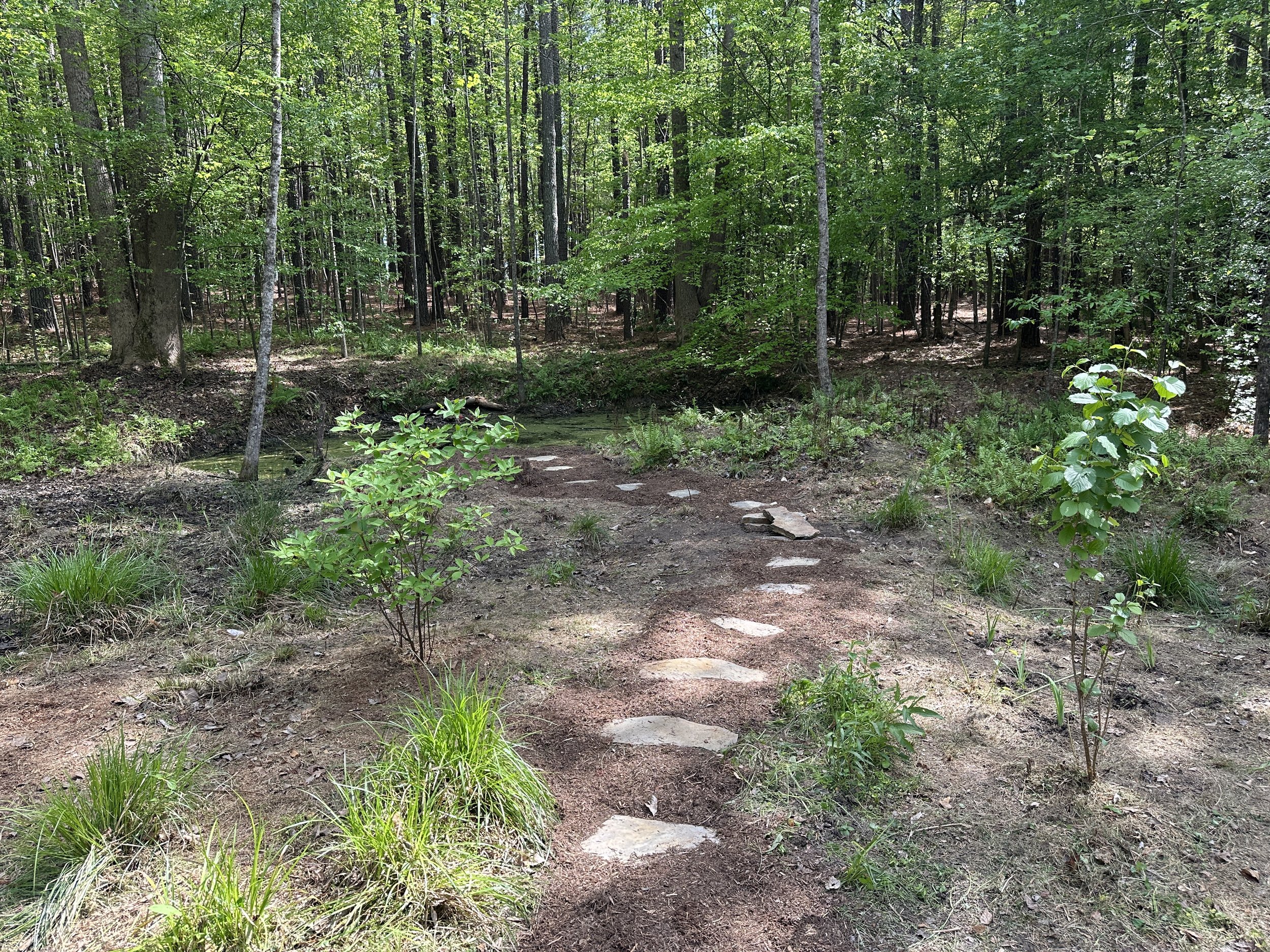
Three types of land we manage
Woodland & Forest
Overgrown, invasive-choked wooded lots reclaimed and returned to healthy native woodland.
Prairie & Meadow
Open land that's grown wild, brought back under control, typically with a bush hog.
Creek & Stream
Banks and surrounding vegetation managed so water moves cleanly and the area stays usable.
Meeting your land in the stage it's in
Every property, wooded, open, or waterfront, is at a different point of decline or recovery. We don't start with a fixed plan. We start by seeing what's actually there.
No one-size-fits-all plan
Land that's mostly intact needs a different approach than land that's been overgrown for a decade. We assess your specific stage before recommending anything.
Your native landscape comes back
Once the invasives are cleared out, the native plants get room to breathe again. Give it a season, and you'll see it flush back in, full and thriving, right where it always wanted to be.
Even one visit makes a difference
You don't have to commit to a full multi-year plan to see real change. A single round of work can meaningfully shift the trajectory of overgrown land.
Woodland & Forest Reclamation
If you have an older lot with big trees, there's a good chance the wooded edge of your property has been slowly overtaken by aggressive vines and shrubs, English ivy blanketing the forest floor, wisteria and honeysuckle climbing your trees, privet forming a dense wall where there used to be open understory. This isn't a sign you've done anything wrong. It's simply what happens to disturbed land near development if nothing steps in to manage it.
Our Process
Our forest work is dialed into a specific order because with invasive species, sequence is what determines whether the work actually lasts.
Site Walk & Assessment
We walk the full wooded area with you, identify what's native vs. invasive, flag hazard trees, and talk through your vision.
Vine & Understory Clearing
Climbing vines are cut at the base first. That's what stops them from strangling canopy trees.
Follow-Up Knockdown
Repeat visits through the growing season exhaust root reserves before invasives can re-establish.
Letting the Land Regenerate
The native plants are usually already there, just suppressed and shaded out by the invasives. Once that pressure is gone, they get the chance to recover on their own.
Additional techniques we use
Depending on the site, a few other tools come into play alongside the core process above.
Brush Pile Stacking
Cleared brush is stacked into piles rather than hauled away, giving birds, rabbits, and other wildlife immediate shelter while it breaks down naturally.
Prescribed Fire
Where conditions and regulations allow, controlled burns knock back invasive growth and encourage the native, fire-adapted species that once thrived on this land. We use this on both wooded and prairie sites.
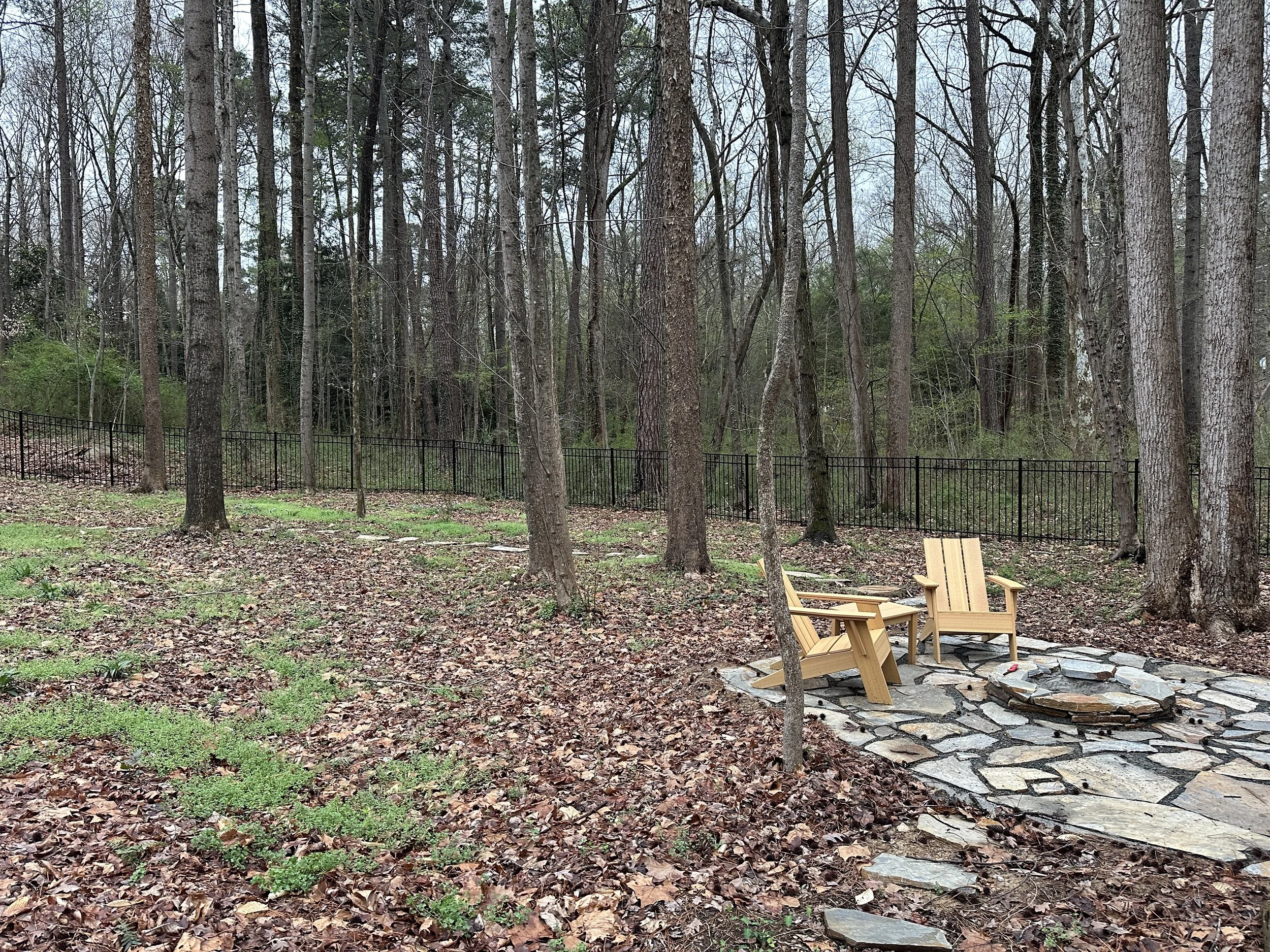
Picture walking your own wooded lot again: open sightlines through the trees, native ferns and wildflowers filling the forest floor, birdsong instead of a wall of privet. That's the actual payoff, and it changes how you experience your own backyard.
What we’re typically managing
Common woodland invaders on residential lots across the Triangle — your site may have some, none, or all of these.
Recent reclamation work
Woodland lots across the Triangle before, during, and after invasive removal and native re-establishment.


Ready to reclaim your wooded lot?
🌼 Prairie & Meadow Management
Open land that's grown wild, overgrown, or gone unmanaged gets the same care as a wooded lot, typically with a bush hog for larger areas. We work with the land's current condition rather than starting over from scratch.
Why it's worth managing
A healthy prairie or meadow supports pollinators and wildlife that a mowed field or an invasive-choked lot can't. It also builds richer soil over time than turf ever will, and once it's established, it needs far less ongoing input than a lawn.
Why it's harder than it looks
The existing weed and invasive seed bank is almost always bigger than people expect. Young native seedlings look a lot like weeds in year one, which is exactly when it's tempting, and counterproductive, to pull them.
Realistic timeline
Site prep alone often takes a full growing season before any seeding happens. From there, most sources put meaningful establishment at 3 to 5 years, with full maturity sometimes taking closer to a decade depending on conditions.
What we use
Bush hog mowing for larger areas, targeted spot treatment, and prescribed fire where conditions allow, the same controlled-burn approach we use on wooded sites.
Give it time, and you'll have a meadow that moves in the wind, buzzing with bees and butterflies, blooming in waves through the season. It's a completely different kind of satisfaction than a mowed field ever gives you.
Ready to bring your meadow back?
💧 Creek & Stream Management
A creek or stream running through your property is an asset, not just a drainage feature. We manage the banks and surrounding vegetation to keep water moving cleanly and the area genuinely usable, not overgrown, eroding, or choked with invasives.
Why it's worth managing
Healthy vegetation along a bank isn't decorative, it's what actually holds the soil in place, filters runoff before it reaches the water, and keeps the stream itself cooler and healthier for fish and other wildlife.
Why it's harder than it looks
Even a stream that's been degraded for decades, eroded banks, compacted soil, years of unmanaged growth, can genuinely be brought back. But work directly on or around a perennial stream bank typically requires permits, so this isn't a project to DIY without checking first.
Realistic timeline
Riparian buffer plantings need a few growing seasons before the root structure is doing real work holding the bank. Documented restoration projects generally show meaningful, measurable improvement in bank coverage and water quality in the 3 to 5 year range.
What we use
Bank stabilization, native buffer plantings, and clearing invasive growth that's choking the corridor, restoring the vegetation that does the actual erosion-control work.
A cared-for creek is one you actually want to spend time near: clear water, a stable bank you can walk down to, the sound of it running instead of the sight of it choked with debris. It becomes a real feature of your property again, not something to avoid.
Ready to restore your creek?
Left unmanaged
Invasive vines choke out trees. Weeds overrun a would-be meadow. Eroding banks get worse with every storm. Whatever kind of land it is, the same rule applies: it doesn't stay the same, it gets harder and more expensive to fix the longer it's left alone.
Cared for
Land that's healthy, functional, and unmistakably looked after, whether that's a walkable woodland with a healthy canopy, a meadow full of native grasses and wildflowers, or a creek bank that's stable and clean-running.
Not sure where to start?
Book a site visit and we'll walk your property with you to determine how to reclaim your land.
Book a Consultation